




On May 15, 2026, NEBS members made a field trip to the Maidstone Bends region of the Connecticut River in northern New Hampshire. Cool, clearing weather made for pleasant (bug-free) conditions, while the previous day’s rain left high water that added to the adventure of finding the best path to river shore locations.
A focus of the day was to practice Salix (willow) identification of the eleven species we encountered. We discussed characters useful for early season identification, including the relative timing of flowering and leaf development, position of catkins along the stem, flowering branchlet characteristics, density of ovaries within pistillate aments, and indumentum on the ovaries. In addition, we tagged one possible hybrid for further examination later in the season.
Many of the willows were in oxbow ponds and wetlands. Other habitats we explored included sandbars along the river, a remnant mature floodplain forest, and floodplain forest restoration in former agricultural fields. Forest remnants were dominated by an overstory of Acer saccharinum L. (silver maple), Fraxinus nigra Marsh. (black ash), Juglans cinerea L. (butternut), and a lush verdant carpet of Dicentra cucullaria (L.) Bernh. (Dutchman’s breeches), Veratrum viride Ait. ssp. viride (American false hellebore), Allium tricoccum Ait. (wild leeks) Viola pubescens var. scabriuscula Torr. & Gray (yellow forest violet), and Matteuccia struthiopteris (L.) Todaro ssp. pensylvanica (Willd.) A. & D. Löve (ostrich fern).
While we focused on observing the plants, we could not help but appreciate the abundant birdlife present, especially an American bittern and a migrating least sandpiper, the latter unusual for this inland location. Thank you to the Nature Conservancy for their efforts to protect and restore riparian habitats along the upper Connecticut River and for hosting our visit.
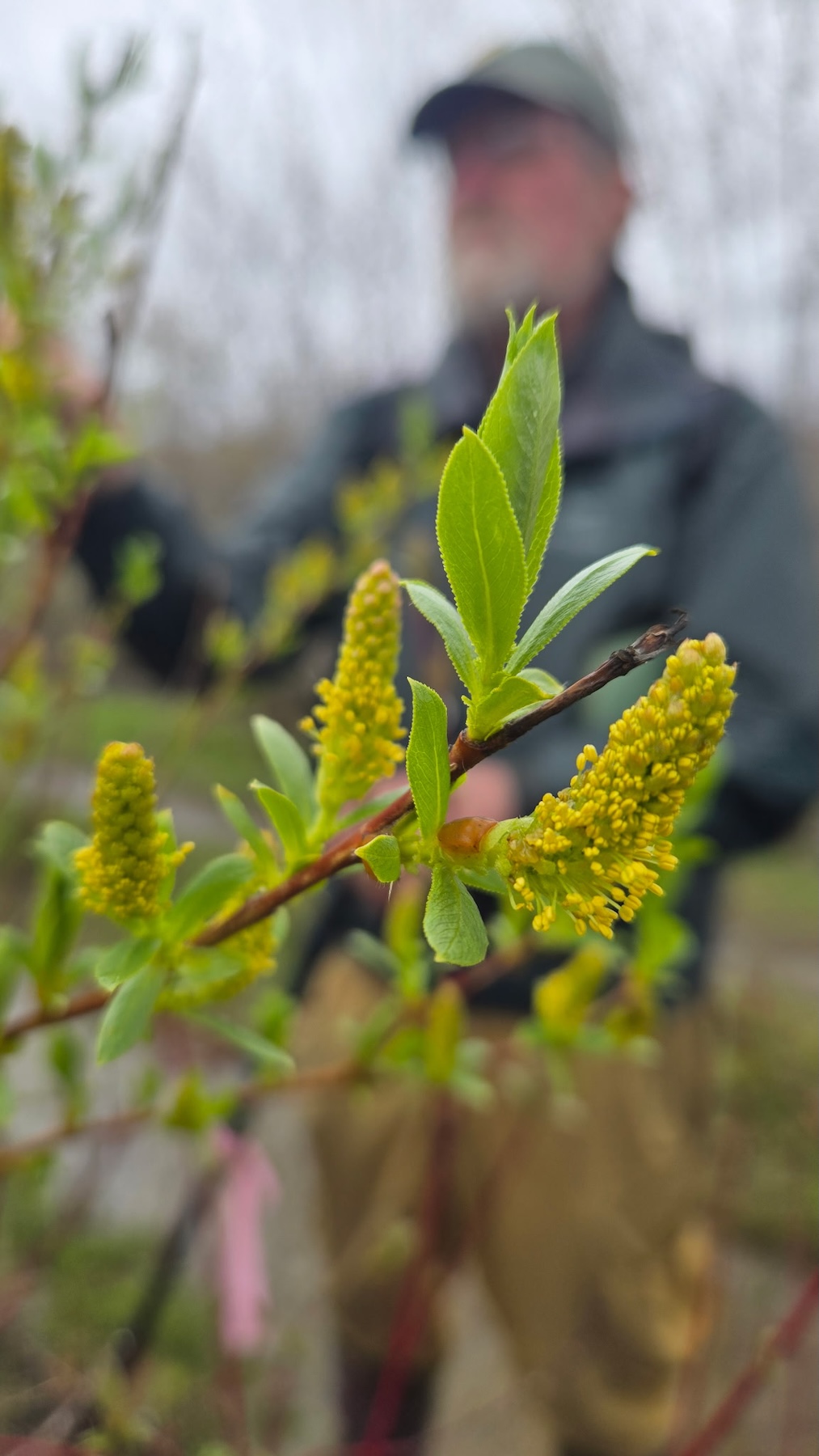
Male Salix lucida Muhl. (shining willow) in full bloom. Photo by Erica Duda
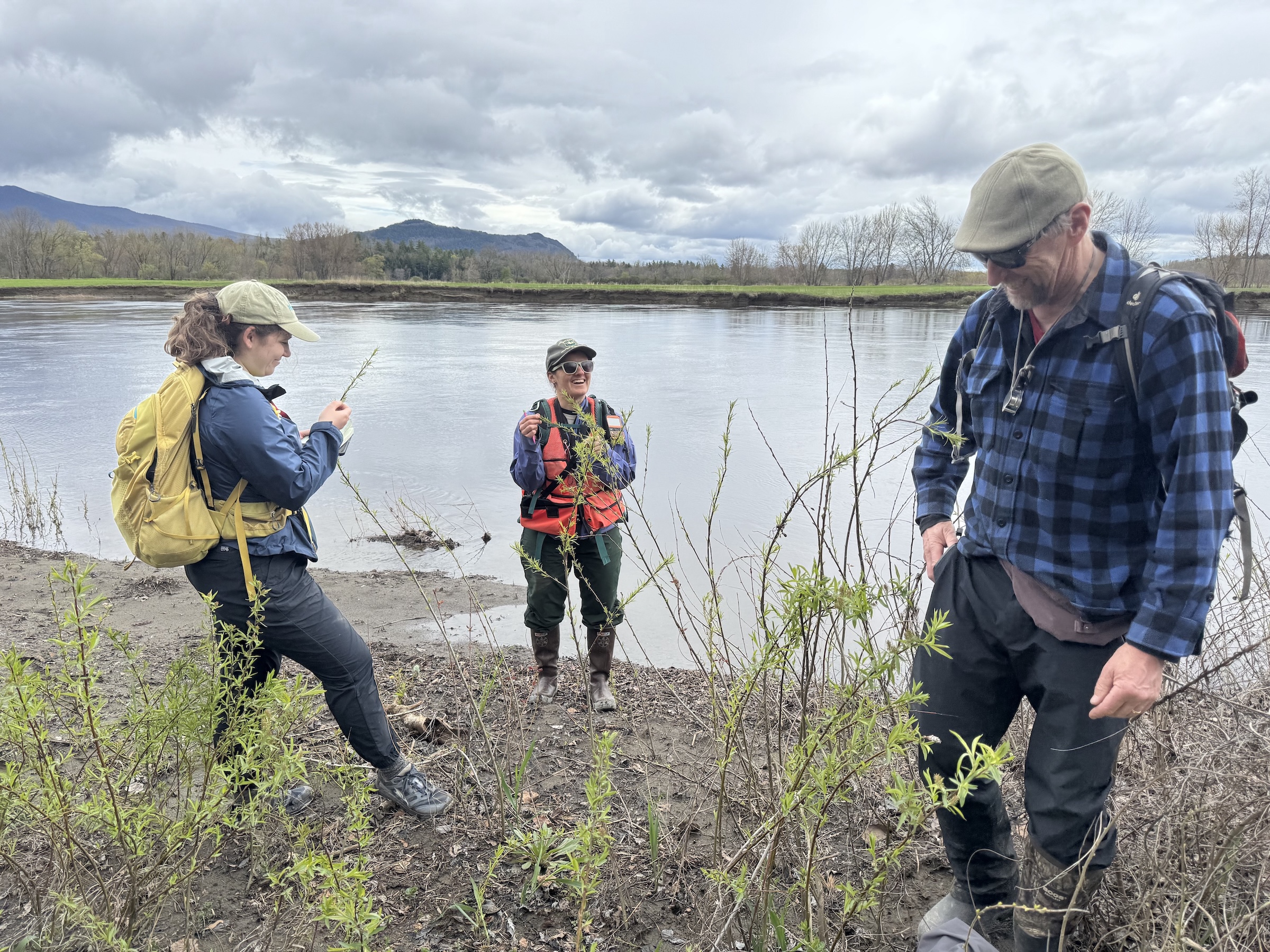
Examining Salix interior Rowlee (sandbar willow) on a sandbar. Photo by Scott Bailey
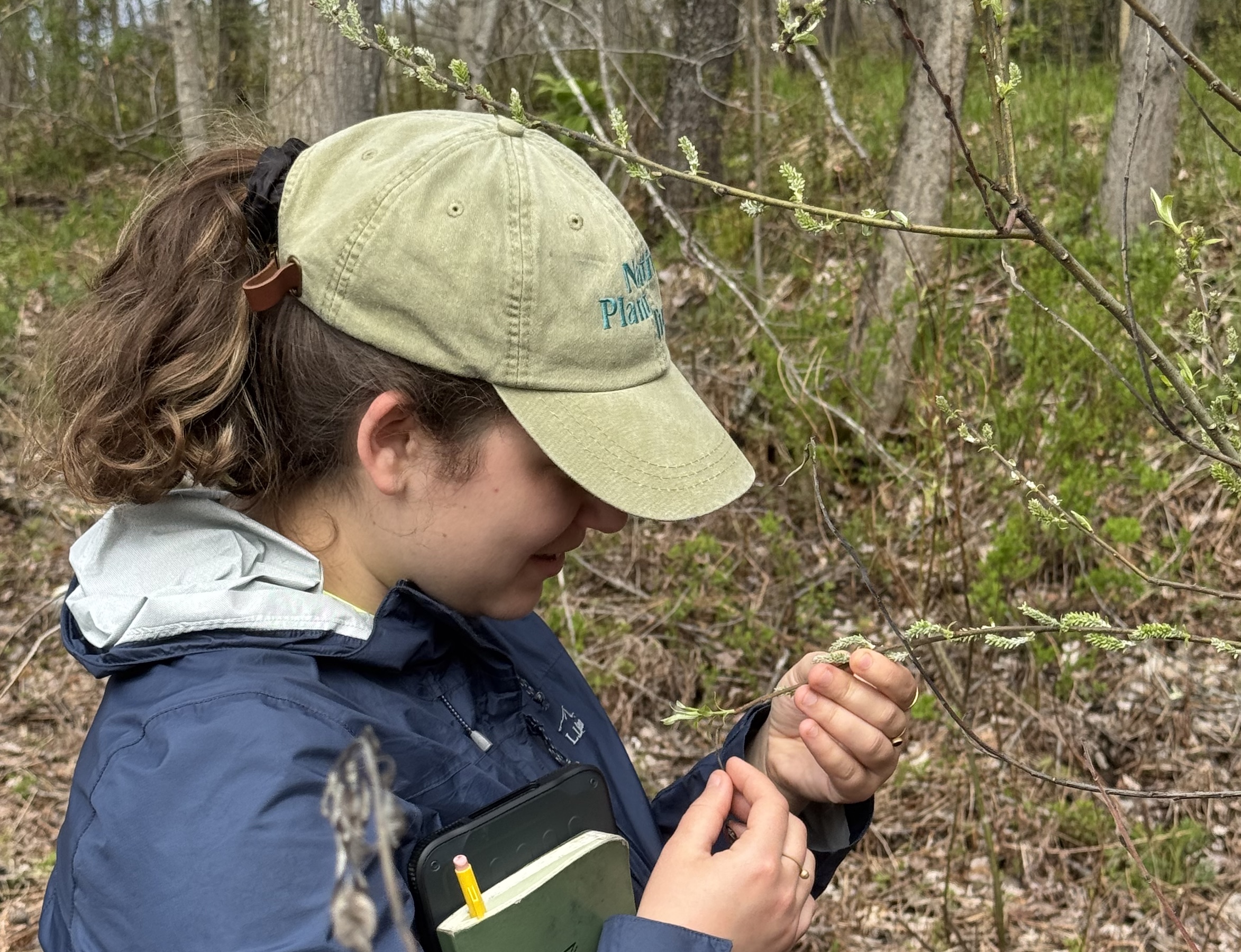
Developing fruit of Salix sericea (silky willow) Marsh. Photo by Scott Bailey
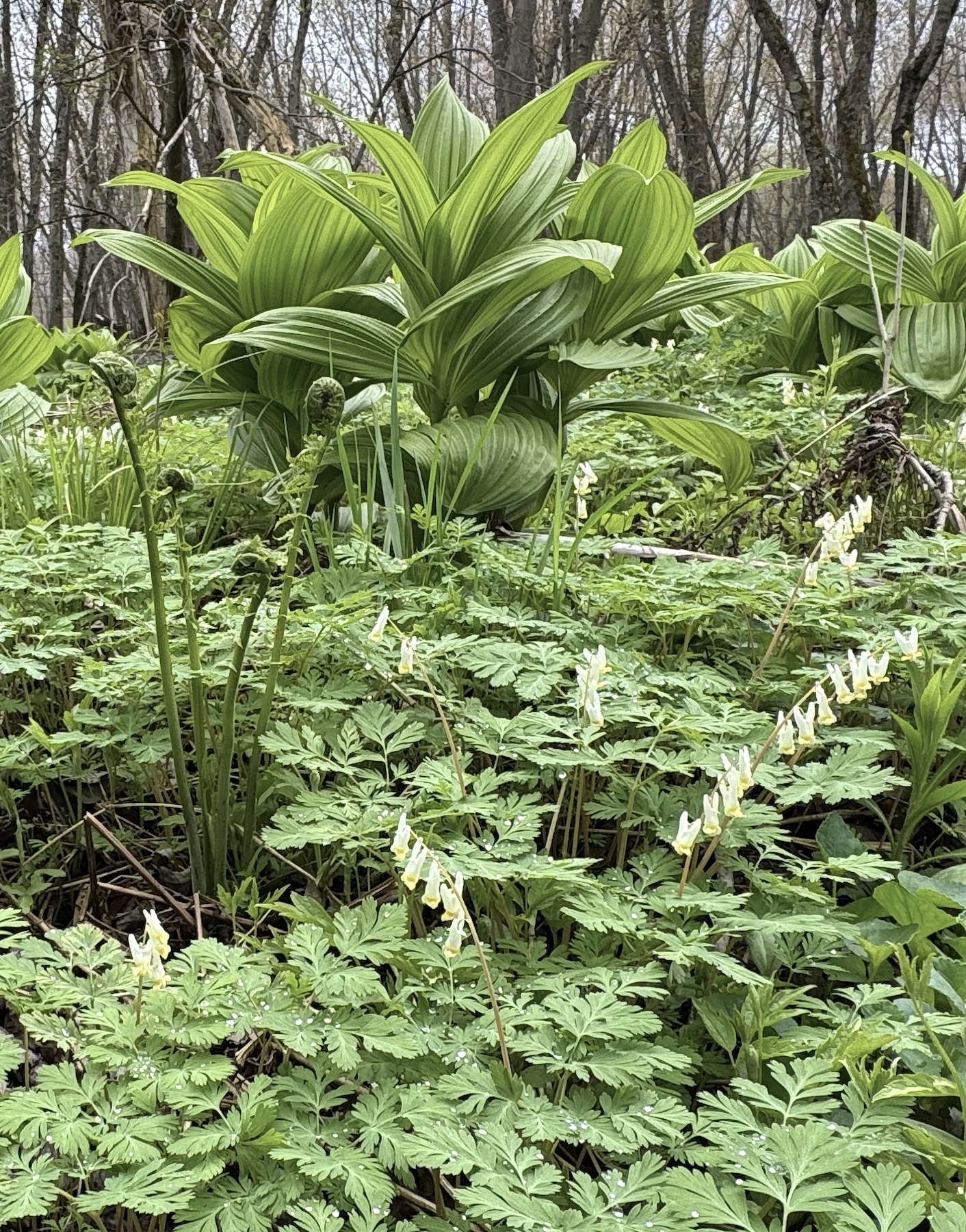
Verdant groundcover in a mature floodplain forest remnant. Photo by Scott Bailey
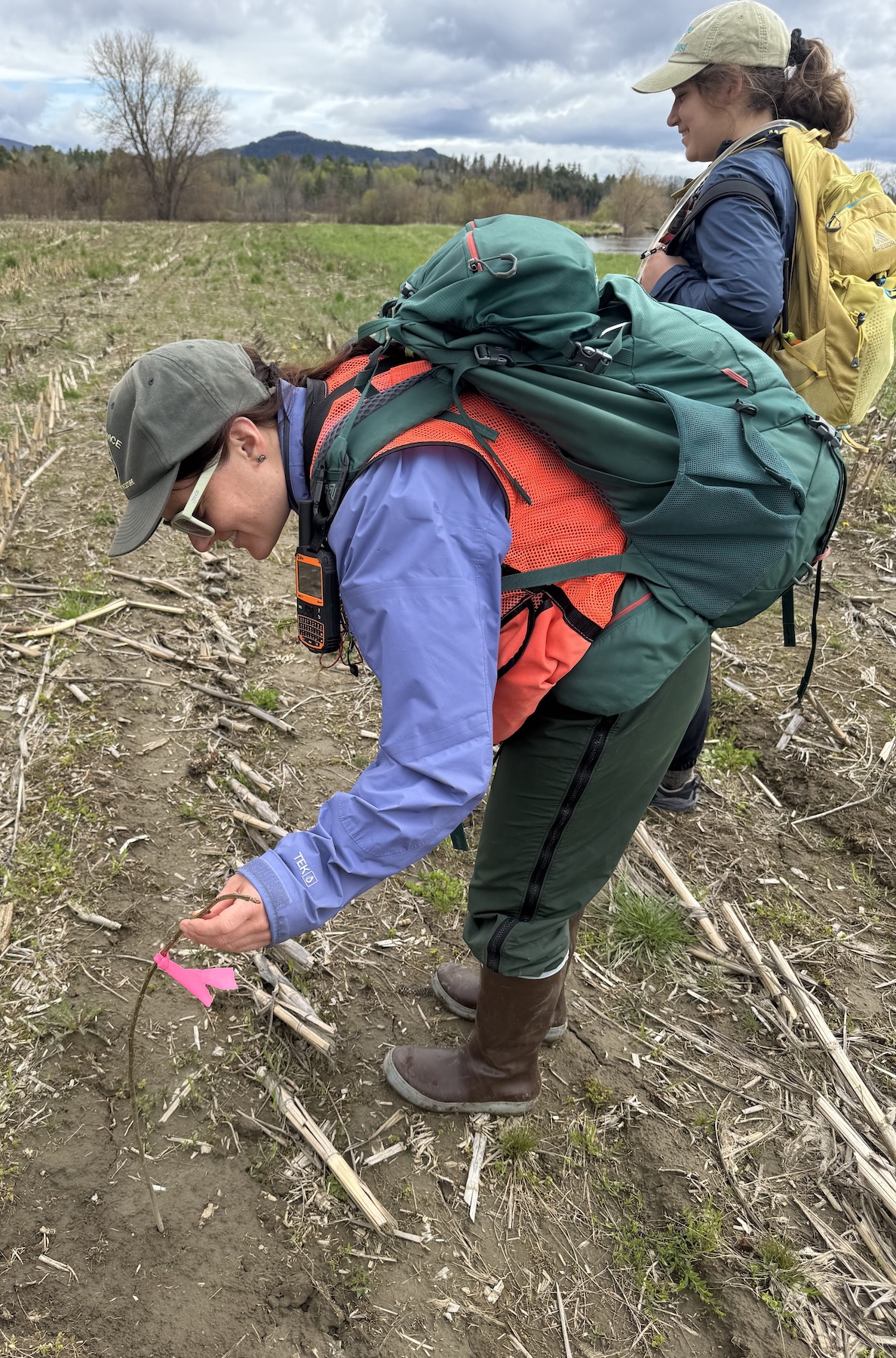
Floodplain forest restoration in a former cornfield. Photo by Scott Bailey
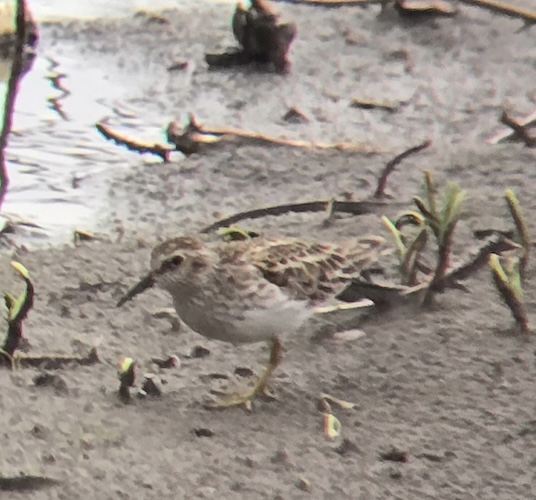
Least sandpiper. Photo by Erica Duda
