




This field season, I’ve been collecting data along the Black River in Windsor County, Vermont in support of my Master’s thesis. Focusing on a four-mile stretch known as the Trophy Trout section, my research examines how recreation access may be influencing plant communities and the spread of invasive species. This stretch is heavily used, especially by anglers, and experiences high vehicle and foot traffic, both of which can act as vectors for invasive plant introduction. By documenting patterns in native and non-native plant occurrence, I hope to inform future recreation access design and restoration efforts that balance use with ecological protection.
In recent weeks, I’ve been joined by colleagues from Harvard University as we navigated fast, high waters to survey six sites and collect data from 60 randomized plots. While the focus is on invasive species, we’ve also encountered some notable native plants, including Mimulus ringens and Lysimachia terrestris, offering encouraging signs of ecological resilience within this heavily used section.
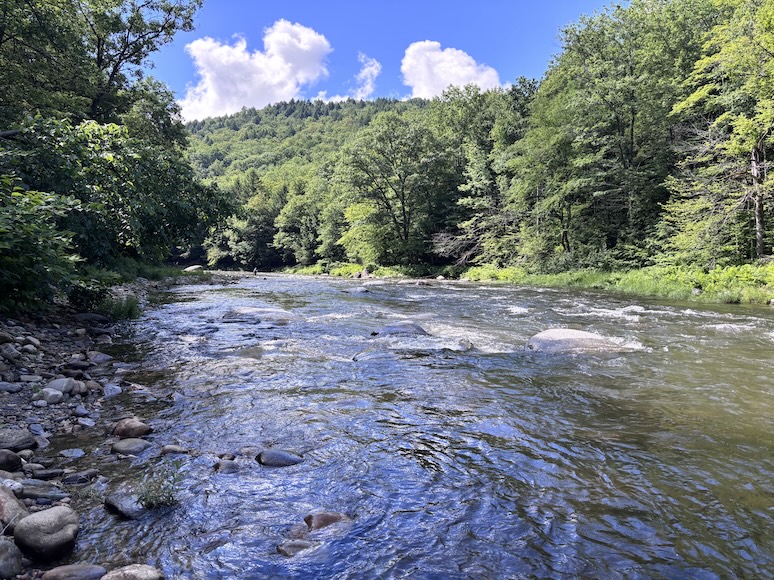
The Black River in Cavendish, VT
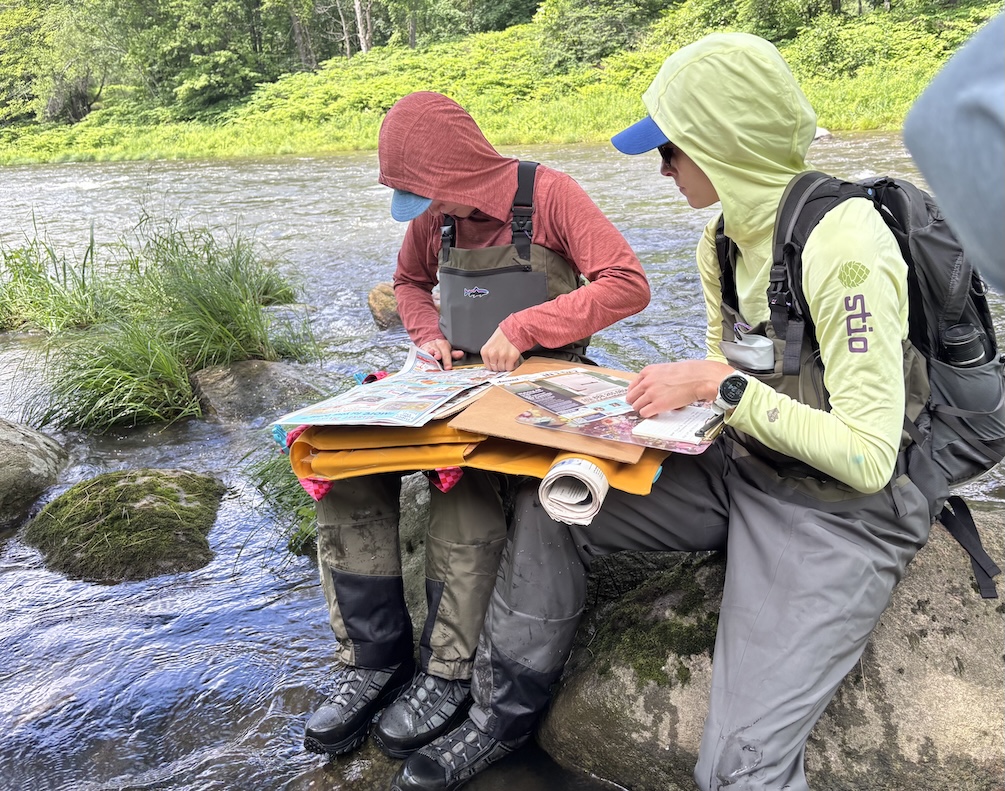
Valentine Geze and Sophia Millay assisting with pressing herbarium vouchers in the field.
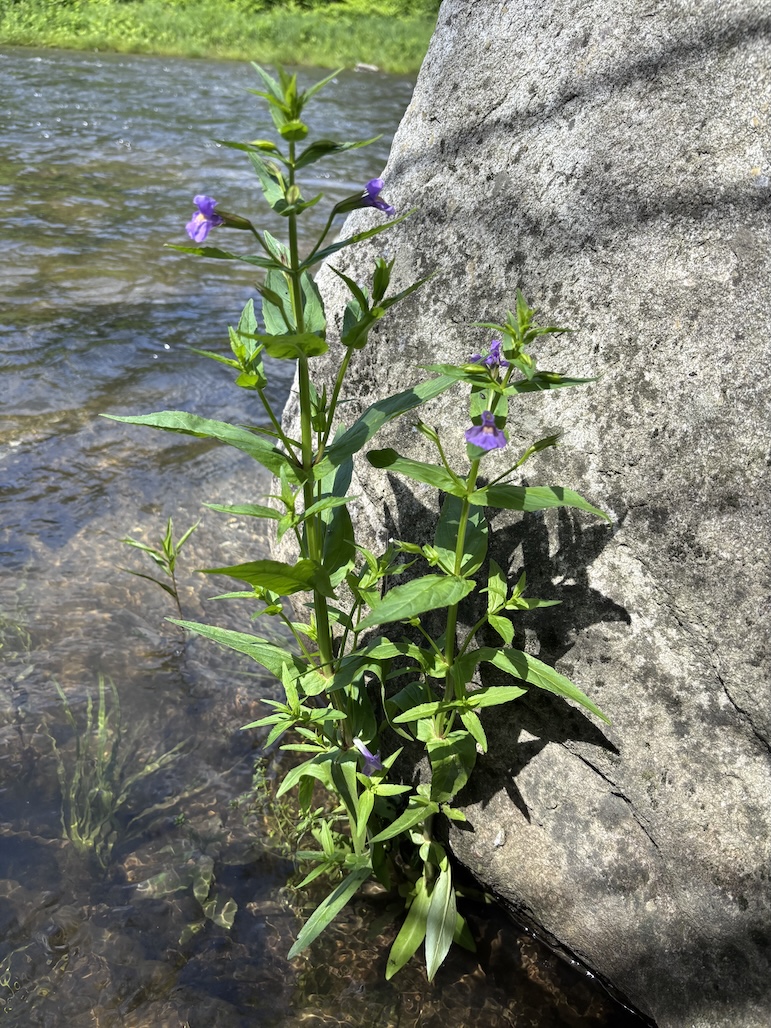
Mimulus ringens growing adjacent to a boulder in the Black River.
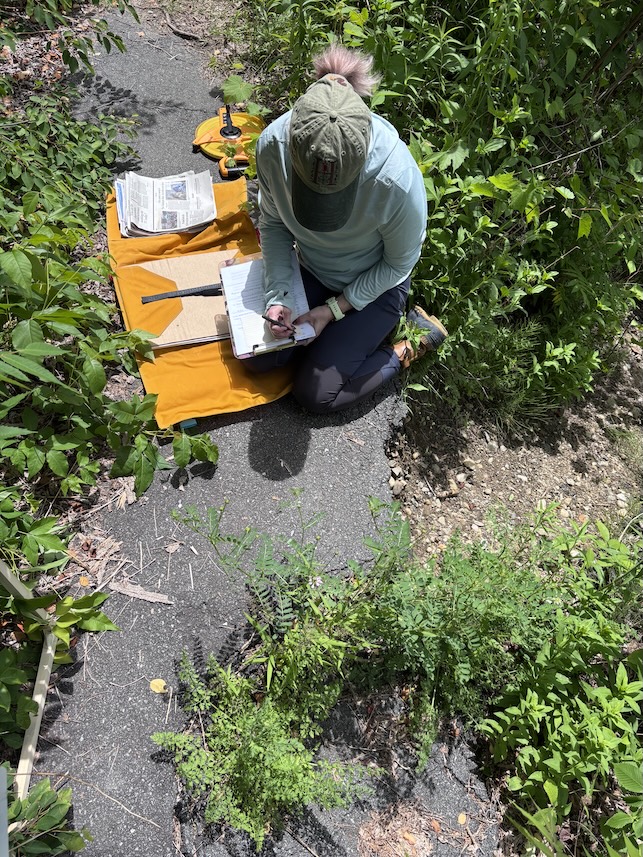
Hannah Merchant recording habitat information and preparing to collect Securigera varia.
