




Meetings
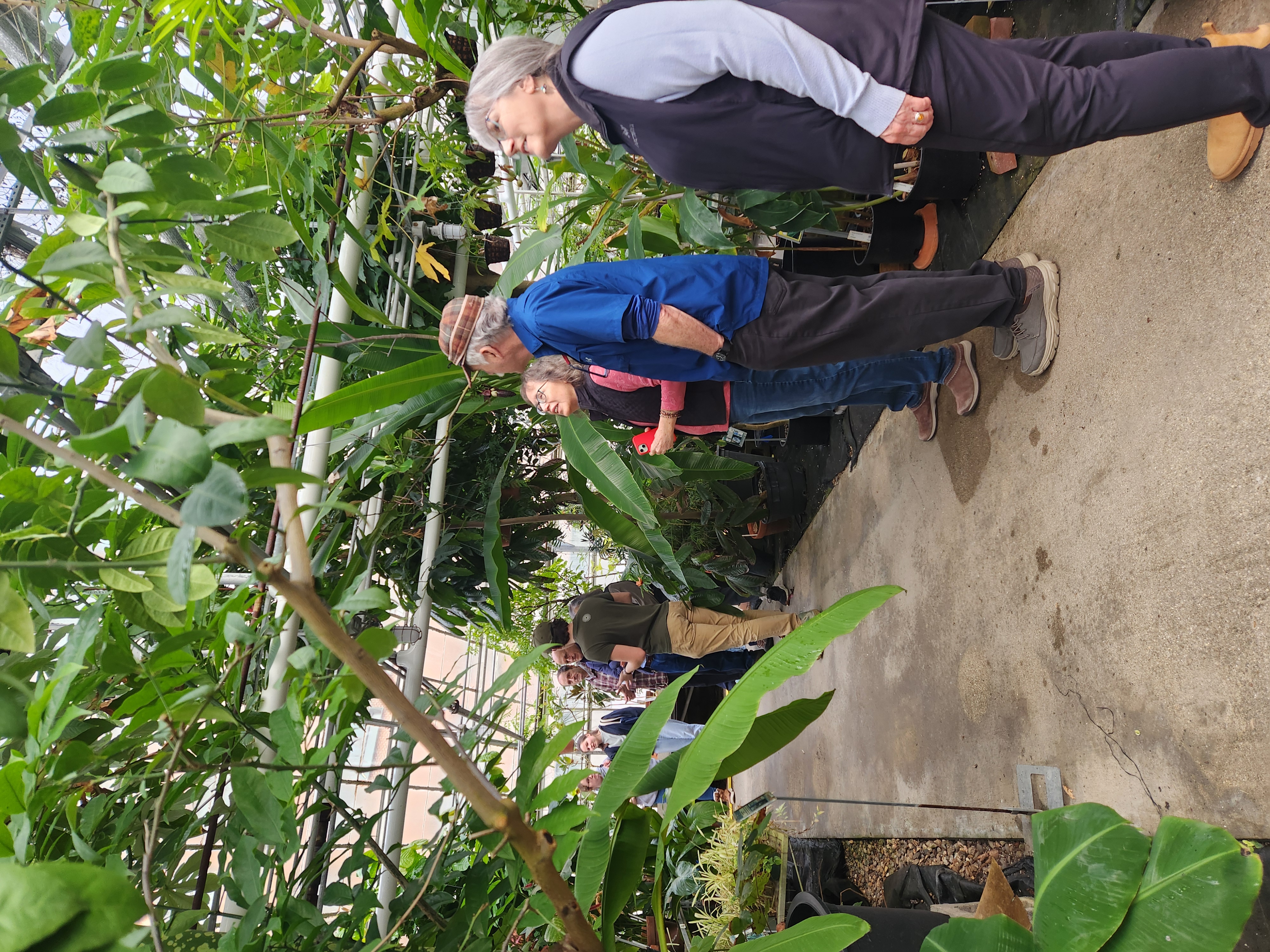 Meetings occur during the academic calendar and feature presentations on diverse botanical topics including plant conservation, physiology, systematics, collections, biogeography, ethnobotany, and author features. Our meetings are free and open to the public. Most meetings occur at Harvard University, with additional “away” meetings throughout the region. When possible, meetings are hybrid. For questions concerning meetings contact the NEBS Coordinator.
Programs at Harvard University are in Haller Lecture Hall (Room 102), Geological Museum, 24 Oxford St., Cambridge, MA 02138 (door to right of Harvard Museum of Natural History entrance). For hybrid meetings, members will receive the Zoom link in the monthly mailing. Non-member registrants will receive the Zoom link before the presentation.
Parking Information for Programs at Harvard University
- Requirements: Harvard now requires pre-registering your vehicle to use the free parking. Links to pre-register are specific to the meeting date and are posted with the corresponding meeting details below. Once registered, the license reader will allow entry to the garage. You will also receive a QR code that allows access to the garage.
- Location: 52 Oxford St. Garage, near the intersection of Everett St. and Oxford St. Interactive Harvard Campus Map
- Hours: Free parking for attendees will be from 4 PM to 9 PM on the Friday of the meeting.
2026-2027 Meetings
Sunday, September 20, 2026
“Celebrate NEBS’s 130th Anniversary with the ‘Dead Botanists Society’”
9:30 AM – 12:30 PM
This event has been rescheduled from 9/13 to 9/20 due to weather. The meeting location will now be at the Asa Gray Garden.
For New England Botanical Society’s 130th anniversary, we’ll be celebrating with the ‘Dead Botanists Society’ of Mount Auburn Cemetery. The cemetery, established in 1831, is a National Historic Landmark and considered the first “garden cemetery” in the United States. The collection features more than 2,500 taxa (in over 20,000 plantings) throughout 175-acres. It is also the final resting place for several notable botanists in NEBS’s history.
Jim Gorman of Mount Auburn Visitor Services will provide a list of plants in flower and talk about the cemetery and eminent botanists prior to the founding of New England Botanical Club in 1896. This includes Asa Gray and the garden named in his honor that was recently renovated and Jacob Bigelow, the architect of the cemetery. Samantha Richardson, Mount Auburn Manager of Horticulture Records, will provide a customized tour map and describe the Flora of Mount Auburn online plant records database of trees, shrubs, and ground covers. Nancy Eyster-Smith, NEBS Corresponding Secretary, will provide biographical highlights of members of the “Dead Botanists Society,” at the burial sites. This includes founding members of NEBC who served as President, Vice President, Treasurer, Corresponding Secretary, Curators of herbaria, and Editor-in-Chief of Rhodora, as well as the well-known Merritt Lyndon Fernald. Additional highlights of the tour will include trees recorded as Massachusetts or New England champions for their species and the Franklin Tree (Franklinia alatamaha), now extinct in the wild, named in honor of Benjamin Franklin.
Location: Mount Auburn Cemetery. Meet at the Asa Gray Garden, 580 Mt Auburn St, Cambridge, MA, for an introduction before we head out on the tour. Please note there are services at the Story Chapel and avoid entering or congregating there. The walk is about 1 mile. Bring water and wear comfortable shoes. Picnicking is not permitted on the cemetery grounds.
October 2, 2026
“Emily Dickinson: The Poet as Botanist”
Presented by Peter Grima
5:30 PM – Hybrid at Harvard University, Cambridge, MA and over Zoom
Non-members, please register here
Register for free-parking at Harvard here
Abstract: Emily Dickinson’s Herbarium is a beautiful and fascinating collection of 424 pressed plants, exhibiting the same kind of careful attention to detail she later applied to her poetry. More than half of these are wildflowers native to the poet’s home landscape of greater Amherst, Massachusetts. Most intriguing are the many rare or locally extirpated taxa among her specimens. The breadth of wildflowers portrays her as an active and meticulous observer of the natural world, and they also represent tangible examples of the same plants she invoked in her poetry with direct connections to the ecological landscape of 19th century Amherst.
In this talk, Peter Grima will dive into Dickinson’s botanical training and interests, as well as the process of creating her Herbarium. He’ll draw connections to her poetry and give examples of how botanical and ecological understanding can enhance our engagement with her work. He’ll also explore the wildflowers and share what they tell us about the Amherst landscape as Dickinson would have experienced it.
November 6, 2026
“The Importance and Conservation Potential of Forests in Cities”
Presented by Dr. Lea Johnson, Director of Conservation, Native Plant Trust
5:30 PM – Hybrid at Harvard University, Cambridge, MA and over Zoom
Non-members, please register here.
Register for free parking at Harvard here.
Abstract: Everyday experiences of nature are the foundation on which our understanding of the natural world is built. Urban environments – intentional, abandoned, and interstitial – are where most people regularly encounter this essential wildness. Forests in cities are surprisingly rich in native diversity. They have the potential to bring nature experience to everyday life and contribute to regional conservation, with stewardship and care.
Dr. Lea Johnson began her research career planting trees just downstream of a municipal wastewater treatment plant, and did her dissertation embedded with the New York City Parks Department. In this talk, she will share insights from her research and practice in urban plant ecology, ecological restoration, and social-ecological systems – including new findings on how tree communities respond to surrounding agricultural and urban land use.
Herbarium Volunteer Day Before 11/6 Program
10 AM – 5 PM
The NEBS herbaria curators will be holding a Herbarium Volunteer Day on November 6, ahead of the evening program. There are plenty of curatorial tasks for people at all levels of experience. Please contact NEBS Curator of Vascular Plants, Lisa Standley at lisa_standley@verizon.net b
December 4th-5th, 2026
Friday, December 4
“The Unexpected Coastal Plain Biodiversity Hotspot“
Presented by Dr. Reed F. Noss, Conservation Science Coordinator, University of Florida Center for Landscape Conservation Planning
5:30 PM – Hybrid at MassWildlife, Westborough, MA and over Zoom
Non-members can register to attend over Zoom here.
Abstract: Global biodiversity hotspots are defined as biogeographic regions that contain at least 1500 endemic plants and have lost 70% or more of their primary vegetation. Hotspots are priorities for protection because it is cost-effective to minimize extinction rates by focusing on high concentrations of species found nowhere else. Also, because centers of endemism are usually climatic refugia, they are less likely to lose species with climate change than regions with higher climate change velocity. The North American Coastal Plain is the most recently recognized global biodiversity hotspot. Some 85% of the plant species endemic to the region are associated with fire-dependent pine savannas and embedded communities. This extraordinary biodiversity is now threatened by explosive human population growth and the associated loss, fragmentation, and degradation of natural and semi-natural habitats. Rapid sea-level rise accentuates these threats. Protection of present and projected future habitat of vulnerable species and natural communities is a high priority, along with efforts to stabilize the human population.
Location:
MassWildlife, Division of Fisheries and Wildlife’s Cronin Building
1 Rabbit Hill Road
Westborough, MA
Saturday, December 5
10 AM – 2 PM: Field Trip to Parker River National Wildlife Refuge
Registration is required for members and non-members. Please register here.
January 15, 2027
“27th Bonding over Botany, Buffet, and Books”
NEBS Membership: Member’s “Show & Tell,” potluck, and raffle
2:30 PM-6:30 PM In-person only at MassWildlife, Westborough, MA
February 5, 2027
“Life on Serpentine: Evolution, Ecology, and Conservation in an Extreme Environment”
Presented by Dr. Nishi Rajakaruna, Professor of Plant Biology, Biological Sciences Department & Coordinator of National and International Fellowships, California Polytechnic State University, San Luis Obispo, CA
5:30 PM – Remote presentation over Zoom
Non-members, please register here.
Abstract: Serpentine soils have long fascinated biologists because of the distinctive floras they support and the extreme chemical and physical challenges they pose for plant survival and growth. As naturally fragmented and environmentally stressful habitats, serpentine systems have become important model systems for addressing major questions in evolution, ecology, and conservation. Drawing on examples from California, New England, and other serpentine regions worldwide, this presentation explores how adaptation to serpentine environments shapes patterns of endemism, speciation, community assembly, and ecosystem function. I will highlight how studies of serpentine-associated plants and other biota provide insight into adaptation to extreme environments and discuss the implications of this work for biodiversity conservation and ecological restoration in a rapidly changing world.
March 5, 2027
“Bryophytes in a Changing World: Linking Ecosystem Function, Climate Resilience, and Conservation Action”
Presented by Dr. Mandy Slate, Assistant Professor at the Ohio State University and Director of the Bryophyte Conservation Alliance
5:30 PM – Remote presentation over Zoom
Non-members, please register here.
Abstract: Bryophytes play outsized roles in ecosystems despite their small stature, influencing water retention, nutrient cycling, carbon storage, and habitat quality. This presentation explores how bryophytes contribute to ecosystem function and climate resilience, highlights emerging threats from environmental change, and discusses current efforts to conserve North America’s mosses, liverworts, and hornworts.
April 2, 2027
“Plants of the Northern Forest: Making a Landscape-based Field Manual”
Presented by Jerry Jenkins, Co-founder, Northern Forest Atlas Project
5:30 PM – Hybrid at Harvard University, Cambridge, MA and over Zoom
Non-members, please register here.
Register for free parking at Harvard here.
Abstract: For those of us who work with living plants in natural landscapes, field manuals are essential tools. The great ones, which I take as scientific masterpieces, both help us identify plants and understand them. Indeed, I would assert, they make a strong case that identification and understanding are co-functional: to do either well, you must do both.
After fifteen years and over forty publications on northern forest plants, I have decided that it is time to write a field manual myself. It will be, by design, a small manual rather than a great one: about 1,600 species, grouped in 7 landscape groups, with about 40 individual landscapes within these groups.
It will, however, be innovative: the first manual to use color vector drawings throughout; the first to be organized by landscape and vegetation; the first to tell you what you are likely to see as well as what you have seen; and the first to present, in drawings and pictures, the plant-landscape relations of an entire flora.
The project is well underway. This talk will be about where we are and where we are going. I’ll talk about why prediction matters and when it fails; how to reduce a flora, divide and order landscapes, and parse species; why floras show patterns that species don’t; and why microclimate, habitat diversity, life forms, and species pools are (still) the keys to these patterns.
May 7, 2027
Presentation by Arthur Haines
Hybrid at 6:30PM at Native Plant Trust’s Garden in the Woods and over Zoom
Non-members can register to attend over Zoom here.
Special Arrangements for May meeting:
- NEBS members and guests are welcome to come early and bring a picnic supper to enjoy before the meeting
- Admission for Garden in the Woods on Friday, May 7, will be free for NEBS members and guests starting at the 10 AM opening. If arriving before 5 PM, please check in at the Visitors Center/Garden Shop. If arriving after 5 PM, the garden gate will be closed, but there is a call button.
- Parking is available on site. If the lot is full, you can exit the Garden and park on the odd-numbered side of any of the side streets. Please be considerate of the neighbors and don’t park on anyone’s lawn or property.
- Education Building facilities: The presentation will begin here at 6:30 PM, so please finish your garden tour and picnic supper before then. Members and guests may use the outdoor picnic tables on the patio before 5 PM and the indoor space after 5 PM. Restrooms are in this building and the Visitor Center.
