




Field Trips
Day field trips are informal, small-group outings to explore interesting places and to see (not collect) interesting plants, facilitated by knowledgeable and enthusiastic leaders. From the coasts of southern New England to the forests of the North, we had a fantastic 2026 season of field trips. Please check back in early 2027 for new trips. Scroll down for a few trip photos and a summary of where we botanized this year.
2026 Field Trips
April 26 – Spring Ephemerals at Surry Mountain, Surry, New Hampshire
Leaders: Karro Frost, Massachusetts Natural Heritage and Endangered Species Program Conservation Planning Biologist; Wendy Ward, retired USDA-NRCS District Conservationist; Nate Marchessault, Ecologist
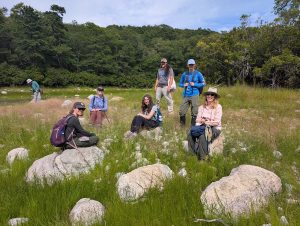
- We took a leisurely walk along the base of Surry Mountain in search of the showy blooms of spring ephemeral wildflowers. The exploration took the group through a diverse array of habitats—from fields and floodplain edges to upland forests, ranging from dark hemlock stands to bright, enriched forests teeming with ephemerals.
May 14 – Maidstone Bends Preserve (The Nature Conservancy), Northumberland, New Hampshire
Leader: Scott Bailey, US Forest Service, Retired
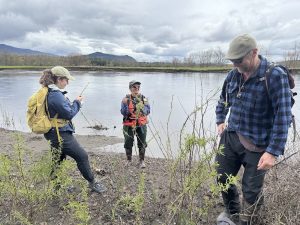
- We explored the floodplain forests, oxbow wetlands, and a floodplain forest restoration project in the Maidstone Bends region at the junction of the Upper Ammonoosuc and Connecticut Rivers. A focus of the trip was on willow identification, and the timing was chosen to coincide with the flowering or fruiting of most of the dozen species that were seen.
May 31 – Budding Botanists: Floodplain Botany of the Sudbury River, Great Meadows National Wildlife Refuge, Sudbury, Massachusetts
Leader: Neela de Zoysa, NEBS Councilor, Botanist, Instructor at Native Plant Trust
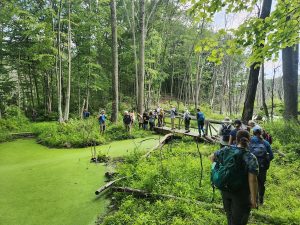
- We enjoyed the wonderful vistas of the meandering Sudbury River at Weir Hill, Great Meadows National Wildlife Refuge. The habitat is lush and diverse, with floodplain trees, swamps of buttonbush and red maple, ferns, graminoids and other herbaceous species. We took a close look at the riverine plants and learned to identify some typical denizens. The location has great observation platforms, and boardwalks for examining plants. This field trip was geared towards beginners, but all were welcome to join.
June 8 – NEBS & Native Plant Trust – Plainfield Sanctuary/Silverweed Seep Botanical Inventory, Plainfield, New Hampshire
Leaders: Erik Sechler, Ecologist/Ecological Programs Coordinator, Native Plant Trust; Ted Elliman, Botanist
-
We visited Silverweed Seep, a rare calcareous riverside seep natural community with lots of unique and rare flora. In addition, we explored the lower slopes of Plainfield Sanctuary!
August 15 – Black Gum Swamp, Harvard Forest, Petersham, Massachusetts
Leader: Eric Karlin, Professor of Plant Ecology (emeritus)
- We explored the Sphagnum (peat moss) community of the Black Gum Swamp, where some 12 Sphagnum species reside. This excursion served as an introduction to the study of Sphagnum in the field. It focused on developing search images for Sphagnum and how to distinguish among the three subgenera present in the swamp.
